

As a provider of Glamping Wood Stoves, I understand the importance of reducing smoke emissions. Not only does it contribute to a cleaner and healthier environment, but it also enhances the overall glamping experience for users. In this blog post, I'll share some effective strategies on how to minimize smoke emissions from a Glamping Wood Stove.
1. Choose the Right Wood
The type of wood you burn in your Glamping Wood Stove plays a crucial role in smoke production. Dry, seasoned hardwoods are the best choice. Hardwoods like oak, maple, and hickory have a lower moisture content compared to softwoods. Moisture in wood requires additional energy to evaporate, which can lead to incomplete combustion and more smoke.
Seasoned wood is wood that has been dried for at least six months to a year. You can tell if wood is seasoned by looking at the ends. Seasoned wood will have cracks and a lighter color. Avoid using green or freshly cut wood, as it can produce up to 10 times more smoke than seasoned wood.
2. Properly Stack the Wood
How you stack the wood in your Glamping Wood Stove can significantly impact combustion efficiency. A well - stacked fire allows for better air circulation, which is essential for complete combustion. Start by creating a base layer of small twigs or kindling. This layer helps to ignite the larger pieces of wood more easily.
Place larger pieces of wood on top of the kindling in a way that allows air to flow between them. A common method is to use the "log cabin" or "teepee" style of stacking. In the log cabin style, you stack the logs in a square or rectangular pattern, leaving gaps for air to enter. The teepee style involves leaning the logs against each other in a cone - shaped structure.
3. Maintain the Stove Regularly
Regular maintenance of your Glamping Wood Stove is essential for reducing smoke emissions. Over time, creosote, a flammable and sticky substance, can build up inside the stove and chimney. Creosote restricts air flow, which can lead to incomplete combustion and increased smoke.
Clean the stove and chimney at least once a season, or more frequently if you use the stove often. You can use a chimney brush to remove creosote from the chimney walls. Also, make sure to clean the ash pan regularly. A full ash pan can block air intake, affecting combustion.
4. Control the Airflow
Proper airflow is the key to efficient combustion and reduced smoke emissions. Most Glamping Wood Stoves come with adjustable air vents. These vents allow you to control the amount of oxygen that reaches the fire.
When starting a fire, open the air vents wide to provide plenty of oxygen for ignition. Once the fire is burning well, you can gradually close the vents to slow down the combustion process. However, don't close the vents too much, as this can lead to incomplete combustion and more smoke.
5. Use a High - Quality Stove
Investing in a high - quality Glamping Wood Stove can make a big difference in smoke emissions. Look for stoves that are designed for efficient combustion. Some stoves feature secondary combustion chambers, which burn off the unburned gases and particles, reducing smoke.
For example, our Glamping Wood Stove is engineered with advanced technology to ensure clean and efficient burning. It has a well - designed air intake system and a combustion chamber that maximizes the use of oxygen.
6. Preheat the Chimney
Preheating the chimney can help to create a stronger draft, which improves air flow and reduces smoke. You can preheat the chimney by using a chimney starter or by lighting a small piece of newspaper at the base of the chimney.
The warm air in the chimney rises, creating a suction effect that draws fresh air into the stove. This helps the fire to burn more efficiently and reduces the likelihood of smoke backing up into the glamping area.
7. Consider Using a Catalytic Combustor
Some Glamping Wood Stoves are equipped with catalytic combustors. A catalytic combustor is a device that helps to break down unburned gases and particles at a lower temperature. This results in more complete combustion and less smoke.
However, catalytic combustors require proper maintenance. They need to be cleaned regularly and replaced every few years, depending on usage.
8. Opt for a Stove with a Good Chimney Design
The chimney is an important part of the Glamping Wood Stove system. A well - designed chimney can improve the draft and reduce smoke emissions. Look for a chimney that is tall enough and has a smooth interior surface.
Our Portable Wood Stove with Chimney features a high - quality chimney that is designed to enhance air flow and minimize smoke. It is made of durable materials and is easy to install.
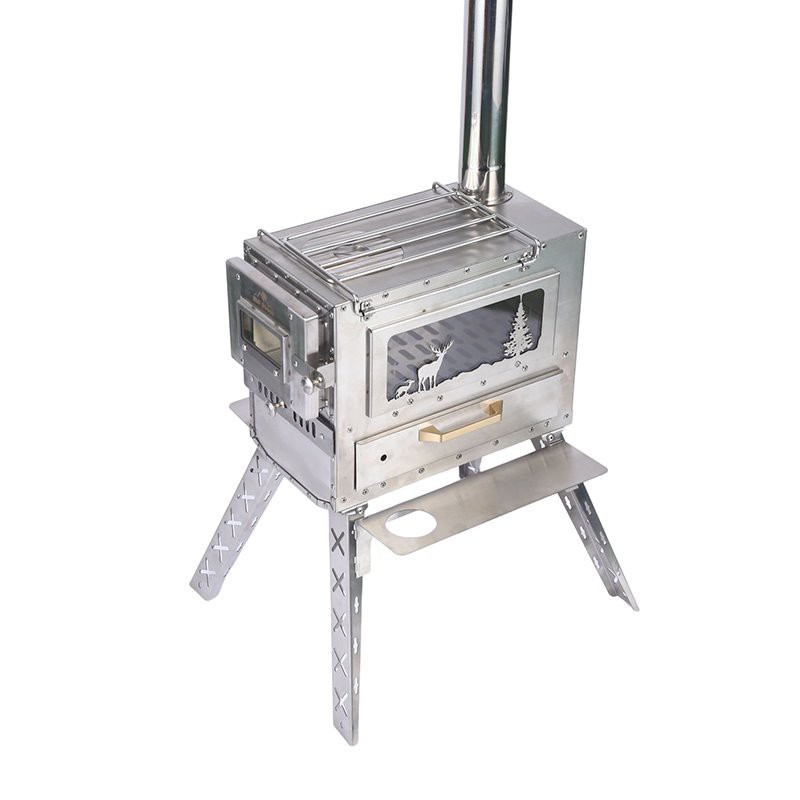

9. Follow the Manufacturer's Instructions
Every Glamping Wood Stove is different, and the manufacturer's instructions provide valuable information on how to operate the stove safely and efficiently. Make sure to read and follow these instructions carefully.
The instructions may include specific guidelines on fuel type, stacking methods, and air control settings. By following these guidelines, you can ensure that your stove operates at its best and produces minimal smoke.
10. Educate Users
If you are providing Glamping Wood Stoves for rental or in a glamping site, it's important to educate users on how to reduce smoke emissions. Provide a brief guide or conduct a short training session on proper stove operation.
Let users know about the importance of using seasoned wood, proper stacking, and regular maintenance. This will not only help to reduce smoke emissions but also improve the overall safety and satisfaction of the glamping experience.
In conclusion, reducing the smoke emissions of a Glamping Wood Stove is achievable through a combination of proper wood selection, correct stacking, regular maintenance, and good operating practices. By implementing these strategies, you can enjoy a cleaner, more efficient, and more enjoyable glamping experience.
If you are interested in purchasing our high - quality Glamping Wood Stoves or have any questions about reducing smoke emissions, feel free to contact us for a detailed discussion. We are dedicated to providing you with the best products and solutions for your glamping needs.
References
- Hearth, Patio & Barbecue Association. (2023). Best Practices for Wood Stove Operation.
- U.S. Environmental Protection Agency. (2023). Wood Burning Basics: Tips for Reducing Emissions.
